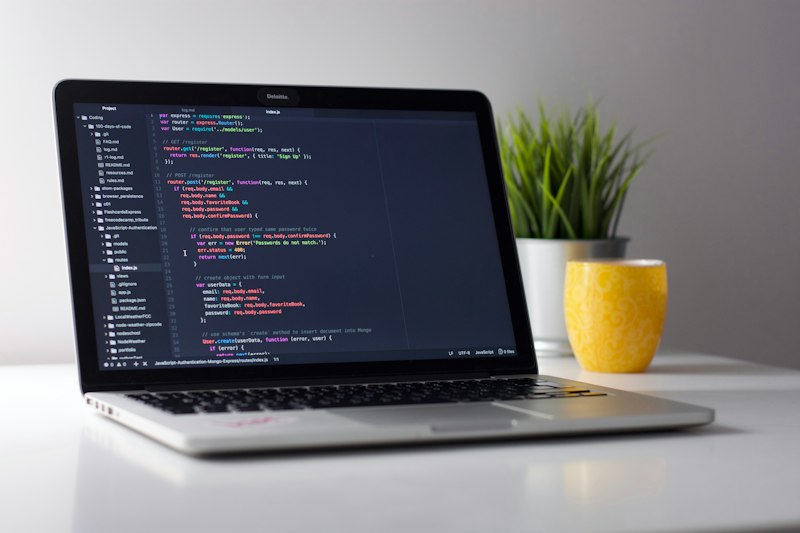
Whether you have never written a single line of code or you are looking to add Python to your skillset, our structured courses guide you through every concept with clarity and practical exercises.
Explore Our CoursesPython stands apart from other programming languages for one simple reason: it reads almost like plain English. When you write Python code, you spend less time deciphering cryptic syntax and more time solving actual problems. This readability makes it ideal for beginners while remaining powerful enough for seasoned developers building complex systems.
The language has found its way into nearly every corner of technology. Data scientists use it to analyze massive datasets. Web developers build applications with it. Automation engineers write scripts to handle repetitive tasks. Researchers in fields from biology to finance rely on Python daily. Learning Python opens doors across industries.
Think of variables as labelled containers where you store information. You might store a person's name in one variable, their age in another, and their account balance in a third. When your program needs that information later, it simply looks inside the container.
In Python, creating a variable takes a single line. You choose a name, use the equals sign, and assign a value. The language figures out the rest. You do not need to declare data types in advance or manage memory manually. Python handles these details so you can focus on logic.
Ready to write your first variables? Our Python Fundamentals Course walks you through hands-on exercises that make these concepts stick.
View Course DetailsEvery piece of data in Python has a type. Numbers behave differently from text. Lists behave differently from single values. Understanding these distinctions helps you avoid errors and write more effective code.
Integers represent whole numbers. Floats handle decimals. Strings hold text. Booleans store true or false values. Lists let you group multiple items together. Dictionaries pair keys with values for quick lookups. Each type comes with its own set of operations and methods.
Our courses do not just list these types and move on. We show you when to use each one, how to convert between them, and what pitfalls to avoid. You will work through realistic scenarios that prepare you for actual programming challenges.
Imagine you need to process a list of a thousand customer records. Without loops, you would write the same instructions a thousand times. With loops, you write them once and tell Python to repeat as needed.
For loops iterate through sequences item by item. While loops continue until a condition changes. Nested loops handle complex patterns. Break and continue statements give you fine control over execution flow.
These concepts transform how you approach problems. Tasks that seemed tedious become straightforward. Errors decrease because you maintain code in one place rather than many.
Functions let you package instructions into named blocks that you can call whenever needed. Instead of copying the same ten lines throughout your program, you define a function once and call it by name.
Well-designed functions make programs easier to read, test, and maintain. They accept inputs, perform operations, and return results. They can have default parameter values and accept variable numbers of arguments.
Our Functions Deep Dive course covers everything from basic definitions to advanced concepts like closures and decorators. You will learn not just how to write functions, but how to design them well.
Functions are where Python programming truly comes together. Once you master them, you can tackle projects you never thought possible.
See All Course OptionsReal results from learners who started exactly where you are now
Programs rarely exist in isolation. They read data from files, process it, and write results back. Whether you are parsing CSV spreadsheets, reading configuration files, or logging application events, file handling skills are essential.
Python makes file operations straightforward. Opening, reading, writing, and closing files all follow clear patterns. Context managers ensure resources are properly released even when errors occur.
Our File Handling Bootcamp goes beyond the basics. You will work with text files, JSON data, CSV spreadsheets, and binary formats. By the end, you will confidently handle any data source your projects require.
"I tried learning Python twice before with other resources. The explanations here finally made things click. Within three weeks, I was writing scripts that automated tasks at my job."Sarah M. — Marketing Analyst, Toronto
"The balance between theory and practice is perfect. Every concept comes with exercises that reinforce what you just learned. I never felt lost or overwhelmed."David K. — Career Changer, Vancouver
Every expert was once a beginner. The difference between those who learn to code and those who do not comes down to taking that first step and sticking with it. Our courses are designed to make both parts easier.
Start with the fundamentals and build from there. Each course connects to the next, creating a clear path from complete beginner to confident Python programmer. Choose the course that matches where you are now, or bundle multiple courses for a comprehensive learning experience.
The information provided on this website is for educational purposes only and should not be considered professional programming advice. Individual learning outcomes may vary based on prior experience, time commitment, and practice habits. While we strive to provide accurate and current information, programming languages and best practices evolve over time. We recommend supplementing any course with additional practice and resources suited to your specific goals.